
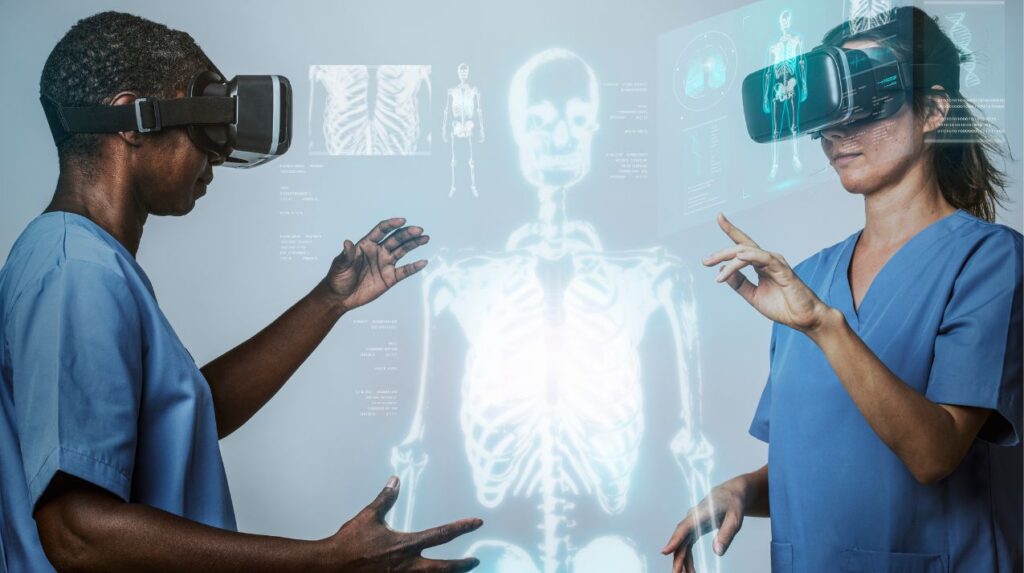
Artificial intelligence (AI) has emerged as one of the most disruptive technologies in the healthcare sector, revolutionizing medical care and the management of health services. From disease diagnosis to the automation of administrative processes, AI is transforming how healthcare professionals interact with patients and optimize resources. In this article, we will explore the anticipated evolution of AI in the healthcare sector and its impact in the coming years.
1) Faster and more accurate diagnoses
One of the fields where AI has shown great potential is in disease diagnosis. Deep learning algorithms can analyze large volumes of medical data, such as MRI and CT scans, to detect abnormalities with accuracy comparable to or better than that of human radiologists. In the future, these technologies are expected to be more seamlessly integrated into hospitals and clinics, reducing diagnosis times and improving the effectiveness of early detection of diseases such as cancer.
2) Personalization of treatments using AI
Personalized medicine is another area that will experience significant advancements with AI. Thanks to the collection and analysis of genetic data, medical histories, and other factors, AI systems will be able to predict which treatments will be most effective for each patient. This will allow for a more precise medical approach tailored to individual needs, minimizing side effects and improving clinical outcomes.
3) AI-assisted surgery and surgical robots
Surgical robots with AI technology are already present in many hospitals, but their evolution will be even more impressive in the coming years. The combination of AI with robotics will allow for more precise and less invasive surgeries, reducing risks and recovery times. Furthermore, AI will be able to predict potential complications and assist surgeons in real-time decision-making.
4) Chatbots and avatars for patient care
Primary care and patient follow-up will also benefit from the evolution of AI. AI-powered chatbots and virtual avatars will improve communication with patients, providing quick answers to their questions, appointment reminders, and personalized medical recommendations. This technology will help reduce the workload of healthcare professionals and improve access to healthcare.
5) AI in drug research and development
Developing new drugs is a costly and lengthy process. AI is revolutionizing this field by analyzing large databases and simulating the behavior of molecules to identify potential drugs more quickly and efficiently. In the future, AI is expected to significantly accelerate research into treatments for rare diseases and the creation of innovative therapies.
6) Remote monitoring and smart devices
Remote health monitoring through AI-powered smart devices will be a key trend in the coming years. Smartwatches, biomedical sensors, and wearables will collect real-time data on patients' health, enabling the early detection of chronic diseases or medical emergencies. This will improve preventative care and reduce the need for in-person hospital visits.
7) AI for hospital management and resource optimization
While this article focuses on the application of AI in patient treatment and care, it is also important to highlight its impact on hospital management. Artificial intelligence will optimize resource allocation, hospital logistics, and service demand forecasting, helping healthcare facilities operate more efficiently.
The evolution of artificial intelligence in healthcare is redefining how healthcare professionals diagnose, treat, and manage patients. From more accurate diagnoses to personalized treatments and 24/7 access to medical care, AI has the potential to significantly improve the quality and efficiency of the healthcare system. As these technologies continue to advance, collaboration between medical professionals and AI developers will be key to ensuring that these innovations are used ethically and effectively for the benefit of patients.